Neck
Neck Pain
Neck Pain Conditions & Treatments — Minimally Invasive Techniques by Dr. Nitin Khanna.


01 — Overview
Understanding neck pain
What the neck is made of
The cervical spine (neck) is made up of seven vertebrae separated by discs. The discs act as shock absorbers and, along with the two small facet joints in the back of the neck, allow for motion in the neck.
Why it is so common now
With the proliferation of mobile phone and computer use, neck pain is an almost universal complaint.
What usually helps
Most people can employ some simple stretching exercises and improved workplace ergonomics to manage these symptoms sufficiently.
When it needs a specialist
However, some individuals have significant pain, requiring evaluation by a specialist.
What that pain looks like
Their pain can have associated weakness, sleep interruption and inability to perform daily activities.

02
What is actually happening
What's underneath
Typically, this results from significant degeneration of a disc, or a disc herniation.
What treatment must address
Any interventional treatment for these patients should have the primary goals of addressing pinched nerves in the neck as well as the underlying injury to the disc itself.
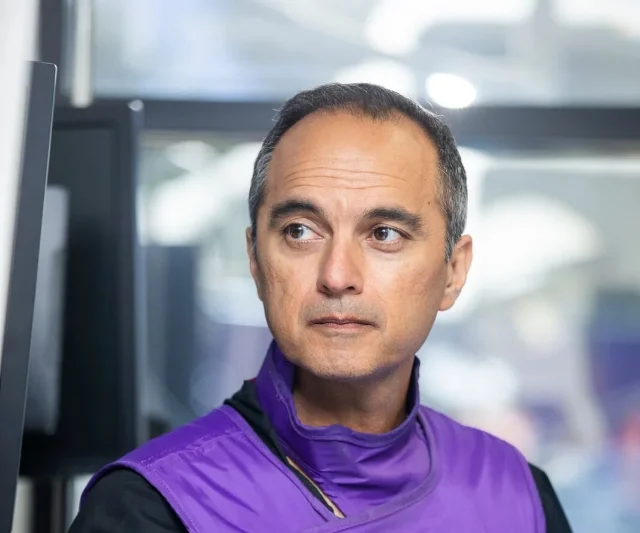
Dr. Khanna's perspective
I recognize that chronic neck pain enslaves patients. It is also, statistically, one of the hardest health issues to fully and permanently resolve. Chronic symptoms endure long past their clinical expectation and have the potential to be with an individual for a lifetime. There is no condition known for being more prone to turn chronic than dorsalgia -- a group of conditions that produce moderate to intense pain in the muscles, nerves, bones, joints or other structures which are associated with the spine.
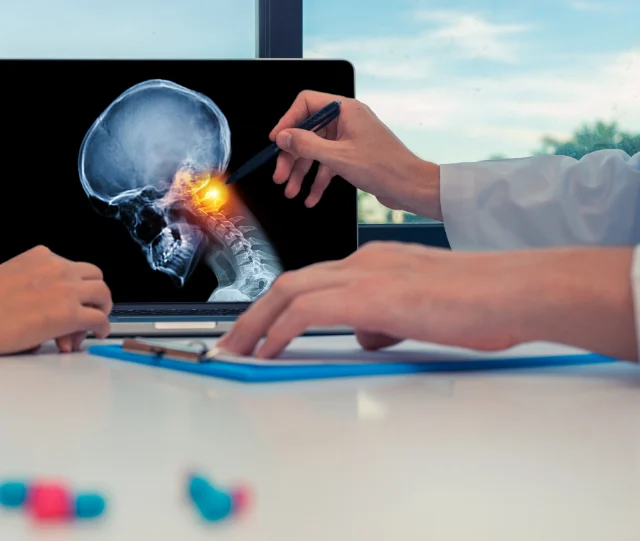
Common concerns about treatment
Many of my patients fear addressing spine-related issues because treatment is thought to involve complex surgery and a great deal of pain. Historically, surgery on the neck (cervical spine) was considered high risk and associated with a multi-day hospitalization. Another misconception is that spinal procedures mean a prolonged recovery as well as limited long-term quality of life improvements by the patient.

How minimally invasive surgery changed this
But, the field of minimally invasive surgery (MIS) has progressed significantly. Decompressions, fusions, disc replacements, even fractures can now be treated with minimal downtime. In fact, many patients go home right after their procedure. MIS is an advanced surgical technique used to treat spinal disorders in the cervical spine (neck) region. In fact, minimally invasive neck surgery has become the rule rather than the exception in a modern cervical spinal operation arena.
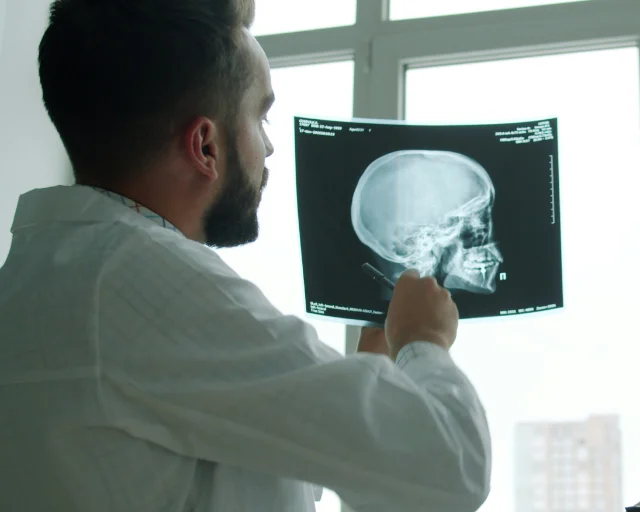
Choosing the right procedure
However, even among minimally invasive approaches to surgical care, there are some techniques that are better than others. Therefore, it is important to consider all procedural options when undergoing any type of surgical treatment for neck pain. Patients are always advised to choose the least invasive type of operation that will successfully achieve the surgical goal. This way, they will be able to attain effectual treatment, while reducing collateral trauma to the surrounding spinal tissues.
02 — Conditions & procedures
Neck Conditions & Procedures
Common Conditions of the Cervical Spine (Neck):
Conditions of the neck produce overlapping symptoms, and only an examination and imaging can tell them apart.
Nerve and cord pressure
3 conditions
-
Spinal Stenosis
A narrowing of the bony channel in the neck through which the spinal cord and the nerves branching from it pass.
What it feels like Neck discomfort may come with numbness, tingling, or a heavy, tired feeling in the shoulders or arms.
-
Radiculopathy (Arm Pain)
Irritation or pressure at a nerve root, the point where a nerve leaves the neck and travels down toward the arm.
What it feels like Pain may be described as running in a line from the neck through the shoulder and into the hand, with tingling or weakness.
-
Cervical Spondylotic Myelopathy
Pressure on the spinal cord itself inside the neck, rather than on the nerves leaving it, associated with changes in the surrounding bones and discs.
What it feels like The hands may feel clumsy with buttons or keys, and the legs can feel unsteady while walking, with or without neck pain.
Discs and cushioning
2 conditions
-
Disc Degeneration
A term for the state of the soft cushions between the bones of the neck when they are thinner and hold less water.
What it feels like A deep, dull ache that is hard to pinpoint may be felt in the neck, with stiffness when the head is turned.
-
Herniated Disc
A cushion between the neck bones in which the softer center can extend past the tougher outer ring.
What it feels like An ache may be felt near the shoulder blade, with tingling that can spread into an arm or hand.
Bone and structure
4 conditions
-
Spondylosis
A broad term for changes in the bones, the cushioning discs, and the small joints of the neck, including ridges of bone along their edges.
What it feels like Stiffness across the neck and shoulders may be described, with a grating or clicking sensation when the head turns.
-
Spinal Fracture
A break or crack in a vertebra, which is a bone in the spinal column running up the neck to support the head.
What it feels like Pain may be felt in the neck itself, with tenderness over the area and stiffness when the head is turned or nodded.
-
Osteoporosis
Bone in which the honeycomb-like inner structure is thinner and less solid, in the neck as in the rest of the skeleton.
What it feels like Aching in the neck or upper back may be described, while in other instances no particular sensation is noticed.
-
Congenital Spinal Malformations
Differences, present from birth, in the shape or arrangement of the bones that stack up to form the neck.
What it feels like Sensations vary, and the neck may feel stiff or sit at an unusual angle, while in other instances nothing particular is felt.
Procedures Utilized to Correct Conditions of the Cervical Spine ( Neck):
Become a patient
Ready for the next step in your spine care?
Book an appointment with Dr. Khanna — or send your MRI for a second-opinion review before deciding on surgery.